Have you seen those videos of robots walking, picking up boxes, or even doing backflips? That’s not science fiction anymore. It’s real, and it’s happening right now in warehouses, factories, and even some homes.
Let’s break down what humanoid robots actually are, how they work, and why everyone is suddenly talking about them.
What Are Humanoid Robots, Exactly?
A humanoid robot is a machine built to look and move like a human. It usually has a head, two arms, two legs, and a torso, just like us.
The idea isn’t just about looks, though. These robots are designed this way because our world is built for human bodies. Doors, stairs, tools, and vehicles are all made for two hands and two legs. A robot shaped like a human can use the same spaces and equipment without needing everything redesigned.
Think of it like this: a forklift can lift heavy pallets, but it can’t climb a ladder or open a car door. A humanoid robot can, at least in theory, do both.
Why are Humanoid Robots Suddenly Everywhere?
You might be wondering why this topic is trending right now. Three things came together at
the same time.
Better Artificial Intelligence
Modern robots use AI systems called Vision-Language-Action models. In simple words,
this means a robot can see an object, understand a spoken instruction, and then physically
act on it. This is the same family of technology behind popularAI chatbots, just applied to a
physical body instead of a screen.
Cheaper and Smarter Hardware
Batteries, motors, and sensors have become smaller, lighter, and more affordable. A robot
that once cost millions of dollars to build can now be manufactured at a fraction of that
price.
Big Companies Are Investing Heavily
Some of the world’s biggest tech and car companies are pouring billions of dollars into this
space. When companies with massive factories and resources join a race, progress speeds
up fast.
Real-Life Examples of Humanoid Robots Today
This is not a “someday in the future” topic. Humanoid robots are already working in real
facilities right now. Here are some genuine, verified examples.
Tesla Optimus
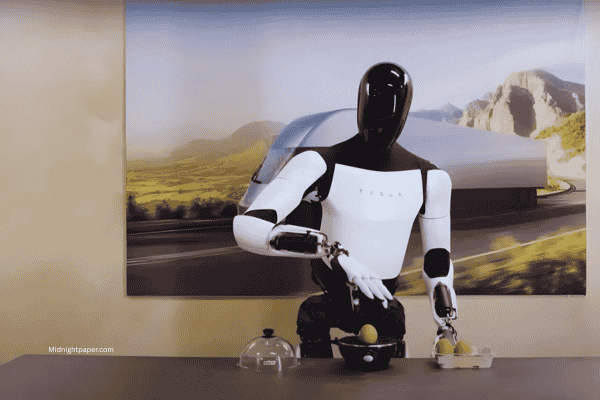
Tesla’s humanoid robot, Optimus, is being tested inside Tesla’s own Fremont factory. It is
currently being used for tasks like sorting battery cells. Tesla has said openly that the robot
is still mainly in a learning phase rather than doing large-scale productive work, but the
company is investing heavily to change that soon.
Figure 03 by Figure A
Figure AI’s robot, called Figure 03, has been working inside BMW’s manufacturing plant in
South Carolina. It helps present car parts to human workers on the assembly line. This
robot can even respond to verbal instructions from the people working alongside it.
Agility Robotics’ Digit
Digit is one of the most tested humanoid robots in the world right now. It has been moving
totes and boxes inside real warehouses for companies like Amazon and other logistics
partners. Digit has already completed thousands of hours of real warehouse work, not just
lab demonstrations.
Boston Dynamics’ Atlas
Atlas is famous for its incredible balance and agility, including jumping and even
performing flips in demo videos. It is now being tested inside Hyundai’s manufacturing
facilities, moving from flashy demonstrations toward real industrial tasks.
1X Technologies’ NEO
Unlike the industrial robots above, NEO is designed for home use. It focuses on simple
household assistance and is built to feel friendly and safe around families, including
children and older adults.
How Do Humanoid Robots Actually Work?
Let’s simplify this without getting too technical.
They See Through Cameras and Sensors. Humanoid robots use cameras, depth sensors, and sometimes LiDAR (a laser-based sensing system) to understand what’s around them. This helps them avoid obstacles and recognize objects.
They Think Using AI Models. The “brain” of the robot processes what it sees and hears, then decides what action to take. This is powered by AI models trained on huge amounts of real-world data.
They Move Using Motors and Joints. Instead of muscles, robots use electric motors, actuators, and mechanical joints. Some of the more advanced hands now have over twenty points of movement, allowing surprisingly delicate tasks like picking up a fragile object.
They Learn From Experience. Many companies use teleoperation, where a human remotely controls the robot to complete a task. The robot’s AI studies this data to slowly learn how to do the task on its
own.
Where Are Humanoid Robots Being Used Right Now?
Service & Retail
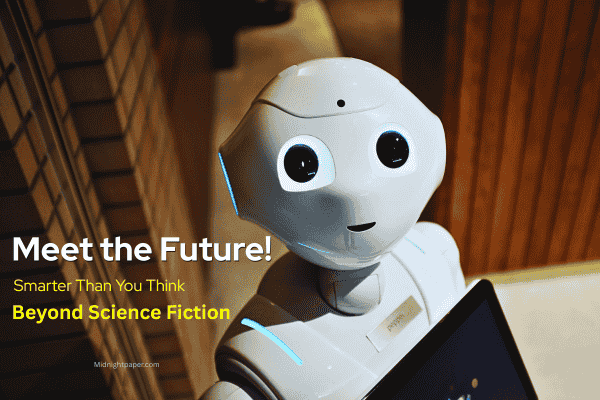
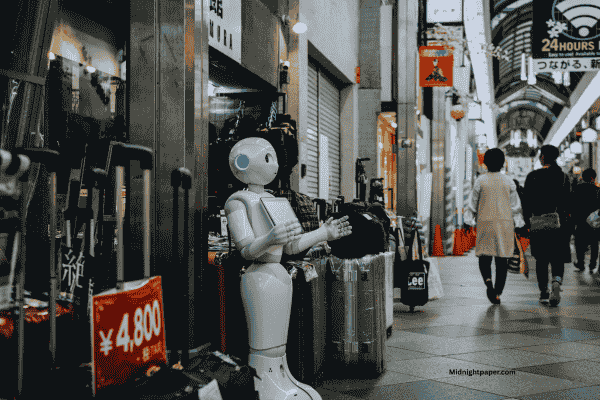
Robots like Pepper already serve as greeters or receptionists in stores, malls, and banks. In the future, humanoids could be common in hotels or restaurants ,chatting with customers, carrying trays, or giving directions. Their humanlike appearance and voice make interactions more natural. For example, a hotel might use a humanoid concierge to assist guests with check-in or local information.
Manufacturing & Warehousing
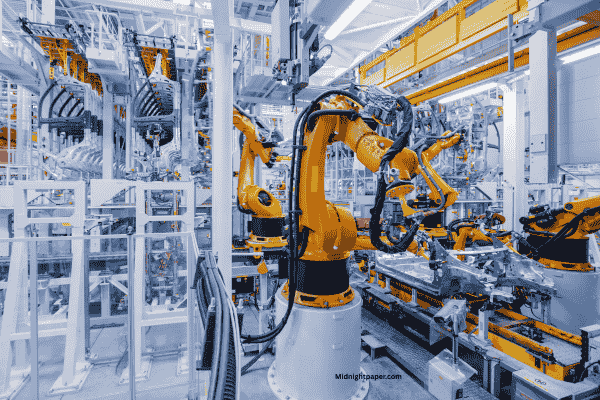
Because factory floors and warehouse aisles are built for people, humanoids can enter existing facilities without costly modifications. A robot like Atlas could walk down assembly lines, carry parts, or load pallets- tasks that might be hard for fixed robot arms. Current trials include loading/unloading goods and sorting packages. In logistics, humanoids could climb ladders or navigate shelves, unlike wheeled robots. Studies suggest that humanoids can augment human workers by doing repetitive or heavy lifting tasks.
Healthcare & Elder Care
In hospitals and nursing homes, humanoids could assist nurses and caregivers. They might help lift patients, deliver medications, or provide reminders. Some prototypes are being tested as therapy or companion robots, engaging patients in conversation or exercise. Research shows humanoids could “revolutionize patient care” by supporting human staff. In the longer term, robots might help care for the elderly at home – fetching items, monitoring health, or offering companionship.
Home & Daily Life
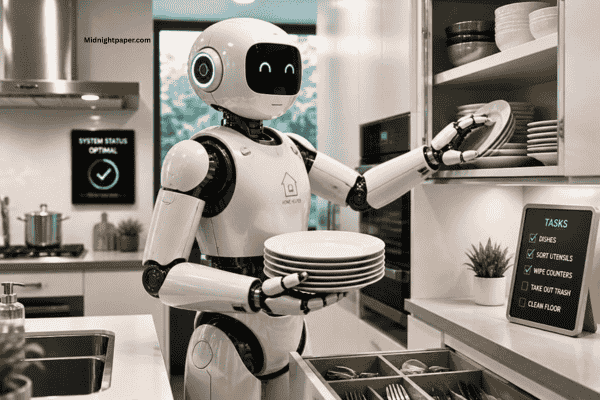
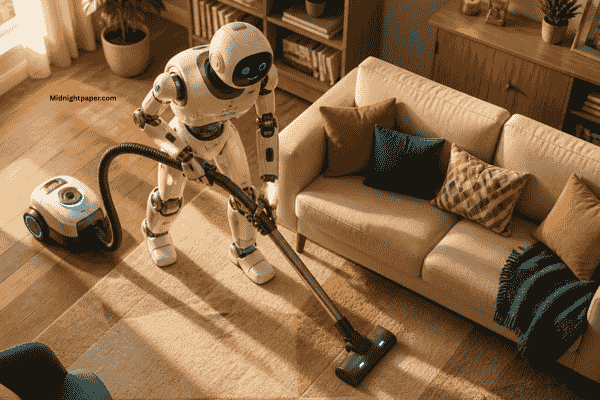
Home-based humanoid robots are still in very early stages. Though still futuristic, many people imagine home-helper humanoids. A household robot could do chores like vacuuming, cleaning, or even cooking and laundry. By using ordinary tools and appliances (because it’s shaped like a person), a humanoid could operate everything from dishwashers to remote controls. Simple examples include fetching groceries from a shelf or folding laundry. As AI improves, these tasks become more realistic.
Hazardous Environments & Exploration
Humanoids may be sent where it’s too dangerous for people. They can use human tools (like flashlights, drills, or fire hoses) in disaster zones, nuclear cleanup sites, or wreckage. NASA and other agencies are developing humanoids for space missions: a robot could perform repairs outside a spacecraft or explore alien terrain using tools meant for humans.
In fact, experiments like the DARPA Robotics Challenge have already shown humanoids doing tasks in simulated disaster scenarios. The idea is that a machine that walks and uses tools like a person can go places and do things that wheeled or industrial robots can’t.
Benefits of Humanoid Robots
Human-Environment Compatibility
They work in spaces and use tools designed for people. This means companies don’t have to rebuild facilities. A humanoid can climb a human-sized ladder or pick up a tool off a table without special adapters. This flexibility is a major benefit in settings built around human workers.
Versatility and Adaptability
A single humanoid can do many tasks. Unlike a stationary arm designed for one process, a humanoid can walk around, pick up different items, and adapt to new tasks with software updates. Manufacturers facing labor shortages see this as appealing. As one industry report notes, “As global labor shortages intensify…manufacturers are increasingly exploring humanoid robots,” since they can move and work like people.
Collaboration with Humans
Being human-shaped makes it easier for people to work alongside them. Humanoids can use gestures and voice to communicate. They can also take over jobs that humans may find boring or physically hard. For example, a robot could do heavy lifting or repetitive inspection work, letting humans focus on supervision and decision-making. Studies suggest that in warehouses and clinics, humanoids could boost productivity by handling routine tasks and working safely with staff.
Safety and Efficiency
Robots can be deployed for risky or tedious jobs. A humanoid can enter hazardous areas (like chemical spills or construction sites) and carry out dangerous tasks instead of a person. They don’t get tired or distracted, so workplace accidents may drop. In industry, automating dull or dangerous chores frees human workers for higher-level roles. This makes operations both safer and more efficient.
Addressing Workforce Gaps
In many countries, there are simply not enough workers to fill all roles in factories, logistics, and care industries. Humanoids have the potential to fill these gaps. By augmenting the workforce, they can keep production running even when human labor is scarce. This could be especially valuable for repetitive tasks that are hard to automate with traditional robots.
Are Humanoid Robots Going to Replace Human Jobs?
This is the question on everyone’s mind, so let’s answer it honestly.
Right now, humanoid robots are mostly filling labor gaps, not replacing existing workers
outright. Many industries, like logistics and eldercare, are facing worker shortages. Robots
are being introduced to handle repetitive or physically demanding tasks so human workers
can focus on more complex or personal work.
For example, in warehouse settings, robots often work night shifts or handle heavy lifting
tasks that are hard to staff consistently. In caregiving discussions, the goal being explored is
for robots to handle physical tasks like transporting supplies, freeing up human caregivers
for emotional and medical support that machines simply cannot provide.
That said, as the technology matures and costs drop, it’s reasonable to expect these robots
will take on more tasks over time. It’s a gradual shift, not an overnight replacement.
How Much Do Humanoid Robots Cost?
Prices vary widely depending on the robot’s purpose and capabilities.
- Budget research robots start around fifteen to twenty thousand dollars.
- Advanced industrial robots can cost well over one hundred thousand dollars.
- Home-focused robots are being introduced at price points aimed at early adopters, similar to how early smart home devices were priced.
Prices are expected to drop significantly over the next few years as manufacturing scales
up, similar to how electric vehicle prices dropped once production increased.
The Future of Humanoid Robots
Humanoid robots are steadily improving, and many experts believe we are entering a new era of development. Companies and governments around the world are investing heavily in humanoid research. For instance, South Korea’s and Japan’s industries continue to push humanoid projects, and China’s robot strategy explicitly includes human-like robots.
However, success will be judged by usefulness, not imitation. As one robotics analyst notes, the question is shifting from “Can it be built?” to “What problem can it solve?” In other words, the most valuable humanoids will be those that do tasks uniquely suited to their form – working in chaotic human spaces or helping people directly, in ways other robots can’t.
Some futuristic concepts are already taking shape. For example, Tesla is aiming for limited production of Optimus around 2025, intending to deploy over 1,000 units in its own factories. This would be one of the first steps toward mass-manufactured humanoids. Likewise, Boston Dynamics has moved Atlas from demos into real warehouse testing with partners like Hyundai. These efforts show a trend: moving from impressive lab demos toward practical trials in industry.
Looking ahead, advances in AI, better batteries, and cheaper electronics will make humanoids more capable and affordable. In a decade, we may see humanoid helpers in care facilities, warehouses, and maybe even homes. For now, most humanoids remain in the “trial” phase, but the pieces are coming together. If these robots can reliably navigate our world, learn tasks, and do so economically, they could become a transformative technology – the first machines truly built for a human-shaped world.
Final Thoughts
Humanoid robots are no longer just a concept from movies. They are actively working
inside real warehouses, real car factories, and slowly making their way into research labs
and homes.
They aren’t perfect yet. They can’t fully replace human workers, and they still need
supervision. But the pace of progress is genuinely impressive, and what seemed impossible
just a few years ago is now a normal part of daily operations in several industries.
Whether you see this as exciting or a little unsettling, one thing is clear: humanoid robots
are here to stay, and they’re only going to get smarter from here.