
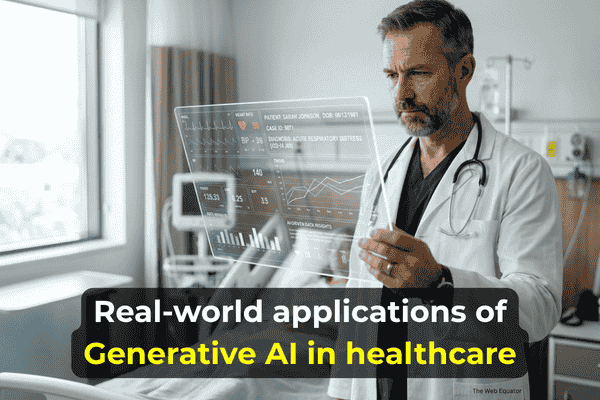
Generative AI is changing healthcare by creating new content, such as images, text, and virtual data, which supports human expertise. Recently, systems using GANs, diffusion models, and large language models have progressed from early experiments to useful tools in medicine.
Industry experts predict that the global market for generative AI in healthcare will grow from about $0.8 billion in 2022 to $17.2 billion by 2032. A survey in 2023 found that around 75% of large health organisations in the U.S. are already using or planning to use generative AI in their clinical practices. Patients have also embraced these tools; ChatGPT reached 100 million weekly users within a year of its launch, and about half of Americans have tried generative AI services.
In summary, generative AI is being used around the world, especially in U.S. health systems. The next sections will share how these applications are helping with diagnosis, treatment, and patient care, supported by real-world research and examples.
Seeing the Unseen: AI in Medical Imaging and Diagnostics

Generative AI is transforming the field of medical imaging by producing realistic synthetic scans, which are valuable for training both radiologists and AI algorithms. These advanced models are capable of generating synthetic X-rays, MRIs, and CT scans, thereby enhancing limited datasets and improving the overall effectiveness of medical training and diagnostics.
In one study, researchers modified a StyleGAN to create 3D MRI angiograms. This helps better identify cerebral blood vessels without requiring additional scans from patients. Another team improved a diffusion model to generate realistic images of melanoma skin lesions, which aids in detecting skin cancer. These tools tackle common problems, as imaging data are often limited or unbalanced for rare conditions. They help expand training data without compromising patient privacy.
Generative models have been utilised to create synthetic endoscopy images, such as images of colon polyps, to improve the accuracy of cancer screening. In these cases, synthetic images were integrated into medical imaging workflows, such as segmentation or classification, and demonstrated an increase in diagnostic performance compared to using only real images.
Generative AI helps interpret medical images. Vision-language models (VLMs) are deep learning tools that use image and text pairs. They can turn radiology images into preliminary reports. For example, one study showed that a VLM could automatically create free-text reports for chest X-rays, greatly reducing the workload for radiologists. These models can summarise key findings from scans, point out unusual details, and compare current images with past ones. This process makes the workflow smoother: clinicians can review and edit the reports generated by AI instead of writing everything from scratch.
Research has found that AI reports can sometimes give false information if they are not checked. Hospitals use a process where humans review AI-generated reports to catch mistakes. Overall, generative AI in imaging is useful for two main things: creating new images (data augmentation) and helping with image interpretation (clinical decision support). Real-life projects are already using this technology to improve both the speed and accuracy of radiology and pathology.
The Digital Chemist: AI in Drug Discovery and Design

In pharmaceutical research, generative AI is speeding up the discovery process. Traditional drug development can take over ten years and require a lot of resources. In contrast, AI can create new drug candidates in just a few months. For instance, models like GANs and reinforcement learning can suggest new molecular structures that target specific diseases. A significant achievement was in early 2020 when the first small-molecule drug mainly designed by AI, DSP-1181 for OCD, entered human trials.
Since then, several biotech companies, including Insilico Medicine and Evotec, have started phase I trials for AI-designed drugs. These algorithms look at biological data, simulate how proteins interact with drugs, and make quick adjustments to improve molecules.
Generative AI is used in protein engineering to create new proteins with specific therapeutic functions. For example, models like ProteinGAN can design synthetic proteins for health issues like cancer and neurological diseases. Researchers also use AI to create “digital twins” of patient data, which helps test drug effects before costly clinical trials, speeding up target selection and drug screening.
Pharmaceutical teams increasingly use generative AI as a “digital chemist” to generate and optimise compounds alongside lab work. This has led to AI-developed drugs entering clinical trials much faster than before.
Precision Medicine: Tailoring Treatment to the Individual
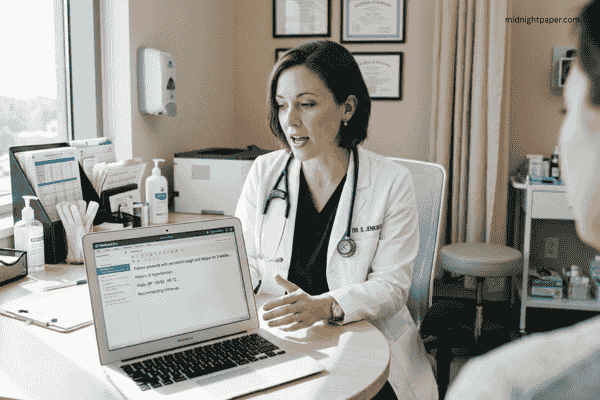
Generative AI is aiding personalised medicine by analysing large health data to customise treatments. For example, AI models can review a person’s genes, medical images, lab results, and lifestyle to suggest optimal care. One study used deep learning to find new markers in retinal images that predict cardiovascular risk, enabling doctors to create tailored treatment plans.
Generative Adversarial Networks (GANs) can also create virtual patient groups with different backgrounds, helping to predict treatment responses. This is especially helpful for rare diseases, where limited real patient data exists. By generating synthetic data, doctors can test personalised dosages and identify who will benefit from treatments.
Generative AI helps match medications to people’s genetic profiles, which is called pharmacogenomics. These models can analyze a patient’s genetic tests and medical history to predict how their body will process different drugs and what the right dosages are. For example, a model called “Generative Tensorial Reinforcement Learning” (GENTRL) can create drug molecules that fit a person’s unique biology.
In practice, AI systems are being tested to suggest changes to prescriptions. By looking at a patient’s DNA and medical records, the AI can recommend customized dosages or alternative medications that are expected to work best. Wearable health devices add more insights by continuously monitoring real-time health data like heart rate and glucose levels, alerting when a personalized treatment is necessary.
In mental health, AI-powered apps use information from users to provide tailored cognitive-behavioral therapy messages. Overall, by analyzing large amounts of data, generative AI is making it possible to create personalized care plans for various health conditions, such as cancer and heart disease.
Automating the Mundane: AI Scribes and Assistants
Healthcare workers deal with a lot of paperwork, and generative AI is helping as a digital assistant. One main use is for clinical documentation. AI-powered “scribes” use speech recognition to transcribe doctor-patient conversations in real time, creating draft notes and progress reports. These notes can include patient complaints, exam findings, and care plans, which often take hours for doctors to complete.
Early tests show that using AI for documentation can reduce the amount of paperwork, allowing doctors to see more patients. Additionally, AI can check medical records for errors. Some systems use large language models to scan charts and notice any contradictions, like mismatched test results or medication errors. This helps improve patient safety and the quality of records.
Generative AI assistants are being integrated into clinical workflows to improve healthcare efficiency. At the Mayo Clinic, nurses created a “Nurse Virtual Assistant” that consolidates a patient’s history, lab results, and nursing guidelines into a single EHR dashboard. This tool enables quick access to important information, allowing nurses to spend more time with patients rather than navigating multiple systems.
Additionally, hospitals are piloting AI chatbots for routine communications, including symptom triage and scheduling, as well as automated billing and coding systems. Overall, generative AI is enhancing clinician support by streamlining tasks and reducing burnout.
Virtual Companions: Chatbots and Mental Health Support
Generative AI is being used in healthcare beyond hospitals, particularly in patient engagement and mental health. AI chatbots can answer health questions, help with symptom checks, and provide therapy-like conversations. For mental wellness, AI companions are showing positive results. Users of popular mental health chatbots, like Woebot and Wysa, report lower symptoms of depression. These bots use both pre-written and generated responses to create supportive relationships similar to those with human counselors. Some patients find these AI tools “life-changing” during tough times, offering empathy and coping strategies when human help isn’t available.
Modern chatbots powered by large language models (LLMs), such as those using GPT technology, demonstrate significant flexibility in various applications. Many individuals have turned to tools like ChatGPT for stress relief, relationship advice, and chronic condition management. Users often find these AI assistants helpful in reframing problems, suggesting coping strategies, and simplifying complex treatment plans.
ChatGPT has been tested as a virtual counsellor in inpatient psychiatric settings and has shown some success in engaging patients. However, experts caution that these AI tools are not substitutes for professional therapists. They can provide plausible-sounding but potentially incorrect information, known as “hallucinations,” and lack the clinical training of certified professionals. Therefore, they are best used as complementary resources to human care, offering 24/7 support or preliminary assessments.
In global health, AI chatbots are considered a promising approach to expanding access to mental health resources, particularly in areas with limited professional capacity. By providing immediate support, these tools can help bridge the gaps in mental health services worldwide.
Synthetic Data: Privacy and Research Acceleration
A powerful hidden use of generative AI is creating fake healthcare data. Real medical data is sensitive and hard to get, so researchers often can’t share enough records for strong analysis. Generative models help solve this problem by creating realistic but fake data that resembles patient records or images.
For example, Generative Adversarial Networks (GANs) can produce synthetic chest X-rays and MRI scans that look accurate. Researchers can use these images to train new AI models or test algorithms without revealing any individual’s records. One review mentions that synthetic data can help increase datasets and “preserve patient privacy.”
Companies and academic institutions are increasingly offering synthetic electronic health records (EHRs) and imaging libraries for research purposes. These resources allow hospitals to evaluate new AI diagnostics using synthetic patients, enabling them to refine the software before its implementation. Additionally, large collaborations in healthcare utilise extensive databases of synthetic cases to investigate various clinical questions. A notable innovation in this area is the concept of digital twins, where researchers create artificial patient trajectories to model clinical trials and forecast the responses of different subgroups to treatments.
This approach not only aids in the early stages of research by mitigating the risks associated with trial design but also enhances the training of AI systems focused on predicting long-term outcomes. By broadening the data landscape, generative AI accelerates biomedical research while navigating around privacy concerns.
Training Tomorrow’s Clinicians: AI in Medical Education
Generative AI is helping medical training by creating interactive learning experiences. For example, a trainee radiologist can practice with unlimited synthetic pathology slides, or a medical student can interview a virtual patient. These scenarios are already possible today. Some initial projects have used images created by GANs as training tools for beginners learning to interpret complex scans. AI can also produce a variety of cases with rare diseases that a student may not encounter in one hospital’s records.
Language models can create realistic patient histories, exam findings, or even role-play dialogues for practical exams. One study reports that generative tools are already used in medical education to create training simulations with scenario generation. This approach enhances learning and allows students to practice and make mistakes safely. As AI technology advances, we may soon see virtual-reality surgical simulators that provide AI-driven feedback, or conversational AI tutors replacing human actors in standardised-patient interactions. These uses of AI are still developing, but educational institutions are starting to integrate generative AI into their simulation labs and online learning programs.
Challenges and Ethical Considerations

The applications of generative AI in healthcare show promise, but there are important challenges to consider. These AI models can sometimes create false information, known as “hallucinations.” In a medical setting, an AI-generated patient note with fake symptoms or an AI-created image showing a non-existent tumour can be harmful.
Research has found that AI report generators can make up clinical findings, which highlights the need for human oversight. Another issue is bias. If the training data does not represent everyone fairly, the AI might produce outputs that reflect racial or gender biases. For instance, one research team used models to identify race-related features in X-ray images. This shows that synthetic data could unintentionally worsen existing healthcare inequalities if not properly managed.
Data privacy is very important. In the U.S., laws like HIPAA protect healthcare data. Any generative AI system that works with patient information must be secure. Experts warn that using consumer tools, like ChatGPT, with real patient data can break HIPAA rules unless the vendor signs a Business Associate Agreement and uses encryption.
Many hospitals choose to develop their own AI or work with AI partners that follow HIPAA rules. Regulatory agencies are still trying to catch up; the FDA has started to draft guidelines for AI-based medical devices, but there is still a lot of work to do.
Finally, we must consider the human factor. Clinicians believe that AI should support, not replace, medical judgment. For instance, leaders at Mayo Clinic emphasise that their Nurse Virtual Assistant “augments, not replaces, the expertise and human connection nurses bring.” Training and understanding are crucial. Doctors and nurses need to know the limits of AI, check its results, and supervise these systems regularly.
In summary, generative AI tools should be integrated carefully: validated on real patients, clear about their reasoning, and used as one part of the overall care process.
Although there are challenges, early uses of generative AI in healthcare show promise. Research in hospitals and labs has shown that generative AI can improve how accurately we diagnose conditions, make workflows more efficient, and even uncover new biomedical insights that humans might miss.
As long as we implement strong ethical measures like thorough testing, designing for privacy, and checking for biases, generative AI could become a common part of healthcare. It is already enhancing clinical processes worldwide, from radiology to drug discovery.
In summary, the potential benefits are great, but we must ensure careful oversight and human expertise.
Generative AI is increasingly being used in healthcare in many ways. It helps with tasks such as imaging, diagnosis, personalised therapy design, clinical documentation, patient support, and medical training. Recent studies and pilot programs show that AI can create medical images, text, and data, making healthcare more accurate, efficient, and personalised. With ongoing research and responsible use, generative AI is likely to become an important tool in healthcare, benefiting both patients and providers.
Stay tuned for more easy-to-follow content that makes Artificial Intelligence simple to learn and apply. Our goal is to break down complex ideas into clear, engaging insights you can actually use.